✳ Free · No sign-up · Ages 5–14

Fruit fly life cycle activities for kids: free games, worksheets and lessons

Meet Drosophila melanogaster, the tiny fruit fly scientists use to study how living things grow. Use this page to teach the four stages (egg, larva, pupa and adult) with a game, a printable sheet and simple discussion prompts.

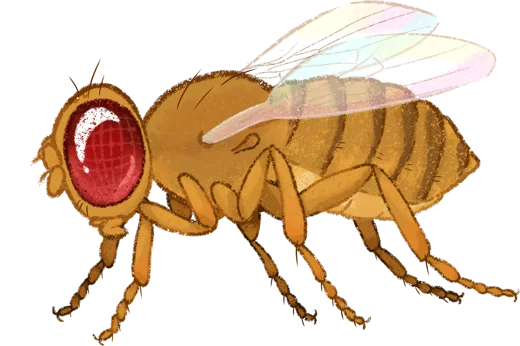
Drosie the fruit fly, an illustrated adult fly with red eyes and wings
✳ MEET THE FLY

Why do scientists study fruit flies?

Fruit flies are small, easy to keep and develop quickly: at about 25°C they go from egg to adult in roughly 9–10 days. That lets scientists watch many generations in a short time.

Many fruit fly genes have counterparts in other animals, including people, so discoveries about flies help scientists ask better questions about how bodies grow and work. For real examples, see the Discovery Library.

Learning objectives

After these activities, students can:

  • name the four life cycle stages in order: egg, larva, pupa, adult
  • describe in their own words what happens at each stage
  • explain that this pattern is called complete metamorphosis
  • tell how a fruit fly's development is similar to and different from a butterfly's
✳ THE LIFE CYCLE

The four stages of the fruit fly life cycle

Timing below is approximate for Drosophila melanogaster at about 25°C (77°F). It changes with temperature, food and genetics.

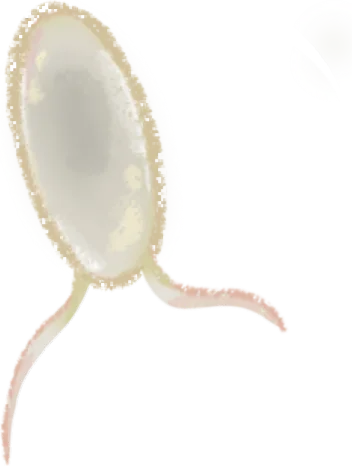
  1. Illustration of a tiny, elongated fruit fly egg.

    Egg

    About 1 day at ~25°C

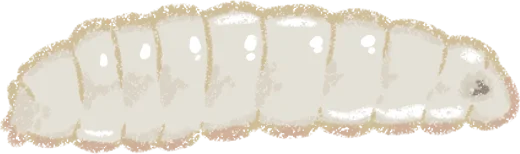
  2. Illustration of a pale, worm-like fruit fly larva.

    Larva

    About 4 days at ~25°C, three larval stages

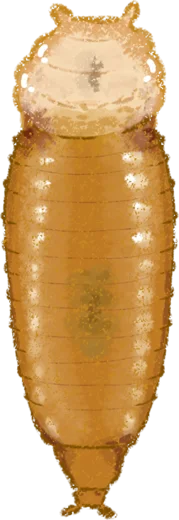
  3. Illustration of a brown, barrel-shaped fruit fly pupa.

    Pupa

    About 4–5 days at ~25°C

  4. Illustration of an adult fruit fly with red eyes and two wings.

    Adult

    Emerges around day 9–10 at ~25°C

The adult lays eggs, and the cycle begins again. Times are approximate for D. melanogaster at about 25°C and are shorter or longer at other temperatures. Illustrations are enlarged and not to scale (a real egg is about half a millimetre long). Drosie's World illustrations.

Egg About 1 day at ~25°C

A fruit fly egg is tiny, roughly half a millimetre long, and has two thin filaments at one end that help it get air. The mother lays it on food such as fruit. An embryo grows inside.

In simple words (ages 5–8): A baby fly grows inside a tiny egg.

Larva About 4 days at ~25°C, three larval stages

The larva (maggot) hatches, has no legs, eats and grows fast. Its skin does not stretch much, so it molts (sheds its skin) twice, giving three larval stages called instars.

In simple words (ages 5–8): A hungry, worm-like baby that eats and grows.

Pupa About 4–5 days at ~25°C

The last larval skin hardens into a brown case called a puparium. Inside, the body is rebuilt into the adult form. The pupa does not eat or move around.

In simple words (ages 5–8): A resting stage where the body changes into a grown-up fly.

Adult Emerges around day 9–10 at ~25°C

The adult fly pushes out of the case, called eclosion. It has six legs, two wings and large compound eyes, and soon can mate and lay eggs, starting the cycle again.

In simple words (ages 5–8): A fly with six legs and two wings that can lay new eggs.

For older learners (ages 9–14)

At about 25°C, the embryo hatches into a first-instar larva roughly a day after the egg is laid. The larva molts twice (three instars), then the third-instar larva stops feeding and its cuticle hardens into the puparium. Metamorphosis happens inside, and the adult emerges by eclosion. Temperature matters: within the range flies tolerate, development is faster when warmer and slower when cooler, so the numbers on this page are not universal.

✳ COMPLETE METAMORPHOSIS

What is complete metamorphosis?

Complete metamorphosis means an animal changes its body form dramatically between stages: egg, larva, pupa, adult. The larva and adult look and live very differently. Fruit flies, butterflies, beetles and bees all develop this way. Not every insect does: grasshoppers, for example, hatch looking like small adults and have no pupa stage.

During the pupa stage, much of the larval body is broken down and the adult body, including wings, legs and eyes, develops. Scientists often describe this as the body being reorganised.

Fruit fly and butterfly compared
StageFruit flyButterfly
EggTiny, elongated, laid on food such as fruitLaid on a host plant
LarvaLegless, worm-like maggot (not a caterpillar)Caterpillar with true legs
PupaBrown puparium, formed from the hardened larval skinChrysalis
AdultTwo wings (plus tiny balancing organs called halteres), six legs, compound eyesFour wings covered in tiny scales, six legs
✳ IN THE CLASSROOM

Three classroom activities using Drosie's World

Each activity uses a resource that already exists on this site. Most are self-paced, so adjust the time to fit your class.

1. Put the life cycle in order

Resource: Life Cycle Game + Lesson 2 sheet

  1. Students explore the guided life cycle first.
  2. They play the sequencing game, or the no-drag menu quiz.
  3. They complete the printable sheet.

Check understanding: students retell the stages to a partner without looking.

Open the game

2. Predict and observe in a virtual lab

Resource: Grow Your Own Fruit Fly

  1. Students write what they think will happen at each stage.
  2. They run the simulation and record what they see.
  3. They compare predictions to results.

Note: the simulation is accelerated; real development takes roughly 9–10 days at about 25°C.

Open the virtual lab

3. Story, then science talk

Resource: Drosie's Storybook + Lesson 1 sheet

  1. Read the storybook together.
  2. Start a class Wonder Wall of questions (Lesson 1).
  3. Revisit the questions after the life cycle game.

Check understanding: which questions can the class now answer?

Read the storybook
✳ FOR TEACHERS

Discussion questions

  • Which stage looks most different from the adult? Why might that matter?
  • Why does the larva spend its time eating and growing?
  • What is the pupa doing if it seems to be resting?
  • How is a fruit fly larva different from a caterpillar?
  • Why might scientists prefer an animal with a short life cycle?
  • What can a simulation show well, and what can it not show?

Younger learners (5–8)

Focus on order and words: egg, larva, pupa, adult. Use the pictures and the simple-words lines above.

Older learners (9–14)

Add larval molts, the puparium and eclosion, and ask how temperature changes the timeline.

Assessing understanding

  • Sequence: students put four pictures in order and name each stage.
  • Explain: a short sentence for what happens in each stage.
  • Compare: two differences between a fruit fly larva and a caterpillar.
  • Exit question: What is complete metamorphosis? Give an example.
  • Observation: listen for correct vocabulary during partner talk.

More resources

✳ QUESTIONS

Frequently asked questions

How long is the fruit fly life cycle?

For the common lab fruit fly, Drosophila melanogaster, development from egg to adult takes roughly 9–10 days at about 25°C (77°F). It is slower in cooler conditions and faster in warmer ones, and it also varies with food and genetics.

Is a fruit fly's life cycle the same as a butterfly's?

They share the same four stages (egg, larva, pupa, adult), which is called complete metamorphosis. The details differ: a fruit fly larva is a legless, worm-like maggot rather than a caterpillar, and a fruit fly pupa is a hardened case made from the larva's own skin rather than a chrysalis.

Do fruit flies really change completely inside the pupa?

Yes. Many larval tissues are broken down and the adult body, including wings, legs and compound eyes, forms from groups of cells that were set aside in the larva. Scientists describe this as the body being reorganised.

Can we raise real fruit flies in class?

Drosie's World does not provide a hands-on rearing guide. The Grow Your Own Fruit Fly activity is a virtual simulation that speeds up the timeline. If you plan to keep live animals, follow your school's policies and use a supplier's instructions.

Are the games safe for children?

The pages run in the browser without accounts. Drosie's World does not ask children for names, emails or other personal details in these activities.

Which ages is this for?

The ideas can be adapted from ages 5 to 14. Younger learners can focus on order and simple words, and older learners can add temperature, larval molts and metamorphosis. Age suggestions here are ours; adjust for your class.